chandrashala
From Underfoot
Q5071455
In Indian architecture, gavaksha or chandrashala are the terms most often used to describe the motif centred on an ogee, circular or horseshoe arch that decorates many examples of Indian rock-cut architecture and later Indian structural temples and other buildings. In its original form, the arch is shaped like the cross-section of a barrel vault. It is called a chaitya arch when used on the facade of a chaitya hall, around the single large window. In later forms it develops well beyond this type, and becomes a very flexible unit, "the most common motif of Hindu temple architecture". Gavākṣha is a Sanskrit word which means "bull's or cow's eye". In Hindu temples, their role is envisioned as symbolically radiating the light and splendour of the central icon in its sanctum. Alternatively, they are described as providing a window for the deity to gaze out into the world.
 Pattadakal si1527
 Old temple, general view from the north-west, Gop, Gujarat
 Osian 17-63
 Osian 16-15
 Osian 16-14
 Osian 16-08
 Pattadakallu (8)
 Osian 16-21
 Bodhgaya(1878) p406 T50
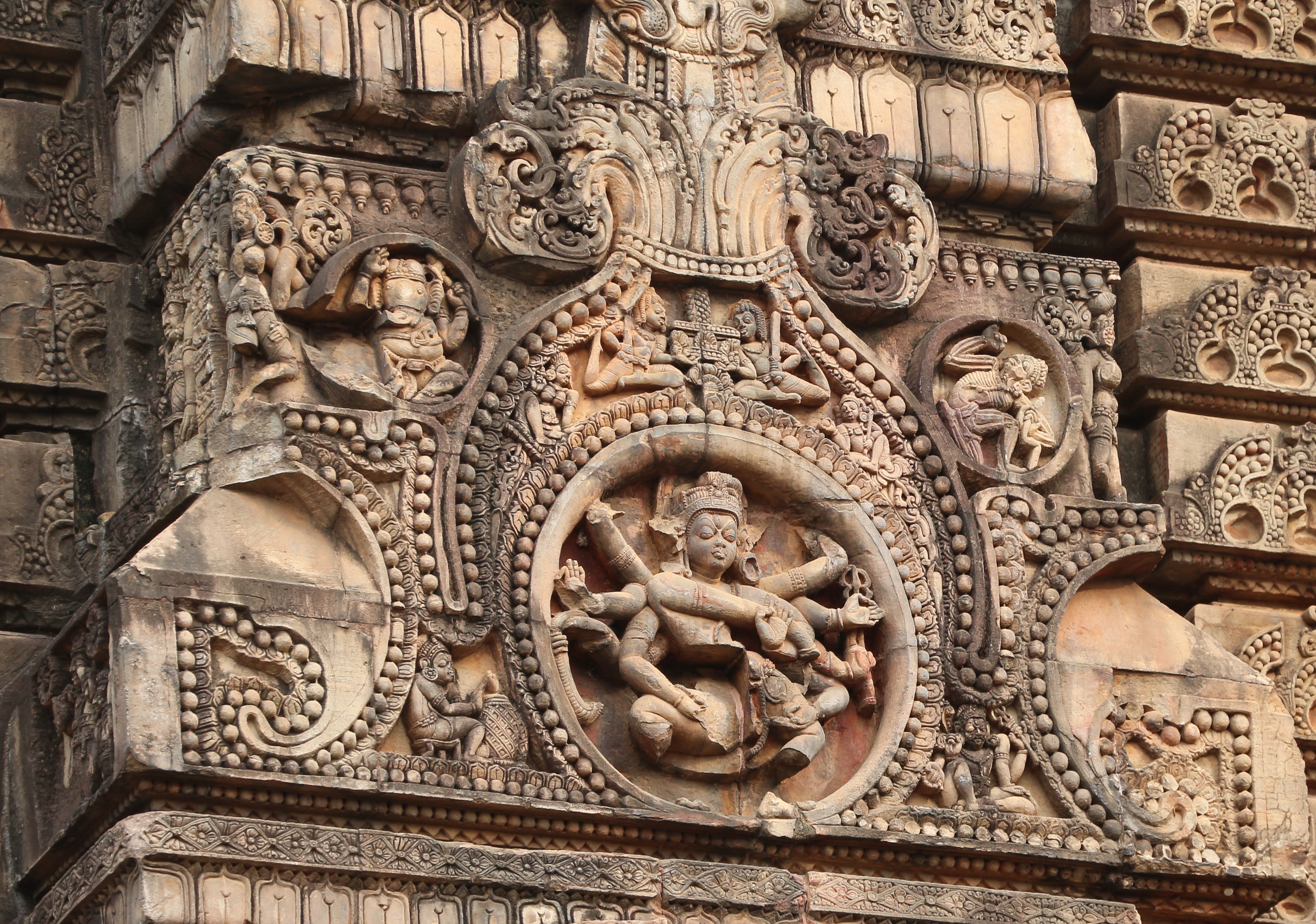 Parasuramesvara Temple 03
| Type | Subtype | Date | Description | Notes | Source |
|---|---|---|---|---|---|
| commons | image | Pattadakal si1527 | Commons | ||
| commons | image | Old temple, general view from the north-west, Gop, Gujarat | Commons | ||
| commons | image | Osian 17-63 | Commons | ||
| commons | image | Osian 16-15 | Commons | ||
| commons | image | Osian 16-14 | Commons | ||
| commons | image | Osian 16-08 | Commons | ||
| commons | image | Pattadakallu (8) | Commons | ||
| commons | image | Osian 16-21 | Commons | ||
| commons | image | Bodhgaya(1878) p406 T50 | Commons | ||
| commons | image | Parasuramesvara Temple 03 | Commons | ||


.jpg)

_p406_T50.jpg)
