Udayagiri and Khandagiri Caves
From Underfoot
Q3536413
Udayagiri and Khandagiri caves, formerly called Kattaka Gumpha or Cuttack caves, are partly natural and partly artificial caves of archaeological, historical and religious importance 3 km south of the city of Bhubaneswar in Odisha, India. The caves are situated on two adjacent hills, Udayagiri and Khandagiri mentioned as Kumari Parvata in the Hathigumpha inscription. They have a number of finely and ornately carved caves built during the 1st century BCE. It is believed that most of these caves were carved out as residential blocks for Jain monks during the reign of King Kharavela. Udayagiri means "Sunrise Hill" and has 18 caves while Khandagiri has 15 caves.
Wikimedia, Wikidata
All ancient caves, structures and other monuments or remains situated on the Udaygiri and the Khandagiri hills except the temple of Parasnath on the top of the Khandagiri hill and also the temple in front of the Barabhuji and the Trisula Caves
India, 
-
Location: 20.2628, 85.786, KML, Cluster Map, Maps,
2 places
-

Hathigumpha inscription ⓘ
Hathigumpha Inscription consists of seventeen lines in a Central-Western form of Prakrit incised in a deep-cut Brahmi script on the overhanging brow of a natural cavern called Hathigumpha in the southern side of the Udayagiri hill, near Bhubaneswar -
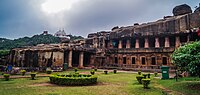
Udayagiri and Khandagiri Caves ⓘ
partly natural and partly artificial caves of archaeological, historical and religious importance near the city of Bhubaneswar in Odisha, India
 Udayagiri and Khandagiri Caves in Bhubaneswar, Odisha, India.
 *Right-hand wing of the Rani Gumpha, Udayagiri*
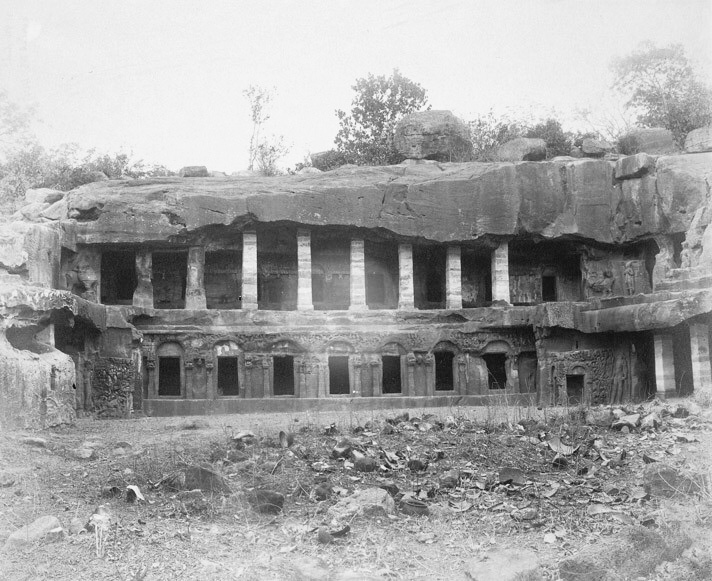 *General view of the facade of the Rani Gumpha, Udayagiri, a photo by Alexander E. Caddy, 1895
 Udayagiri Jain Caves ei3-04
 Udayagiri Jain Caves ei3-16
 Udayagiri ei3-18
 Udayagiri Jain Caves ei2-66
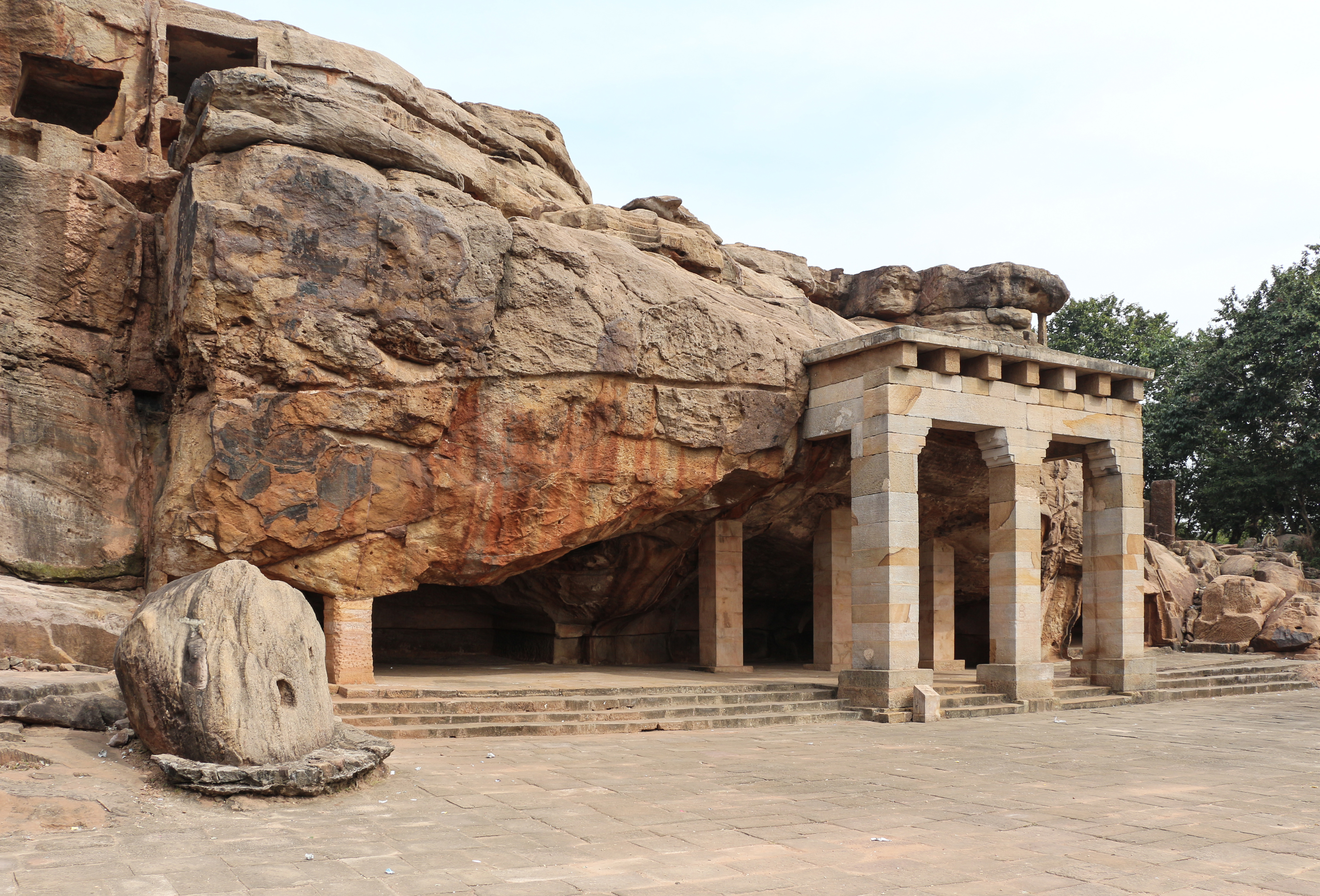 Udayagiri Caves - Hathi Gumpha
 Udayagiri Caves - Ganesha Gumpha 04
 Udayagiri Caves - Rani Gumpha 01
| Type | Subtype | Date | Description | Notes | Source |
|---|---|---|---|---|---|
| site | cave | Hathigumpha inscription | edict, cave | Wikidata | |
| site | cave | Udayagiri and Khandagiri Caves | cave temple, Jain temple, cave | Wikidata | |
| commons | image | Udayagiri and Khandagiri Caves in Bhubaneswar, Odisha, India. | Commons | ||
| commons | image | *Right-hand wing of the Rani Gumpha, Udayagiri* | Commons | ||
| commons | image | *General view of the facade of the Rani Gumpha, Udayagiri, a photo by Alexander E. Caddy, 1895 | Commons | ||
| commons | image | Udayagiri Jain Caves ei3-04 | Commons | ||
| commons | image | Udayagiri Jain Caves ei3-16 | Commons | ||
| commons | image | Udayagiri ei3-18 | Commons | ||
| commons | image | Udayagiri Jain Caves ei2-66 | Commons | ||
| commons | image | Udayagiri Caves - Hathi Gumpha | Commons | ||
| commons | image | Udayagiri Caves - Ganesha Gumpha 04 | Commons | ||
| commons | image | Udayagiri Caves - Rani Gumpha 01 | Commons | ||


Rummage summary