Cave of Maltravieso
From Underfoot
Q3813753
The Cave of Maltravieso in Cáceres, Extremadura, Spain, was discovered in 1951. It shows traces of human occupation from the Middle Paleolithic. It contains cave art, most notably a total of 71 hand stencils, enumerated in the 1990s using ultraviolet photography, but also linear designs and some animal paintings. In a 2018 study based on uranium-thorium dating, a hand stencil from the Cave of Maltravieso was dated to 64,000 years ago. This would make it Middle Paleolithic art, predating the presence of European early modern humans, with important implications for Neanderthal behavior. This dating, and the possibility of Neanderthal cave art, is disputed on the physical-chemical evidence.

Location: 39.4574, -6.3709, KML, Cluster Map, Maps,
2 places
-

Cave of Maltravieso ⓘ
cave in Spain -

Puerto Viejo Tunnel ⓘ
 Entrada Maltravieso
 Maltravieso
 ParqueMaltravieso
 EntradaMaltravieso
 Cueva de Maltravieso en Cáceres
 Cueva de Maltravieso 02
 Cueva de Maltravieso 01
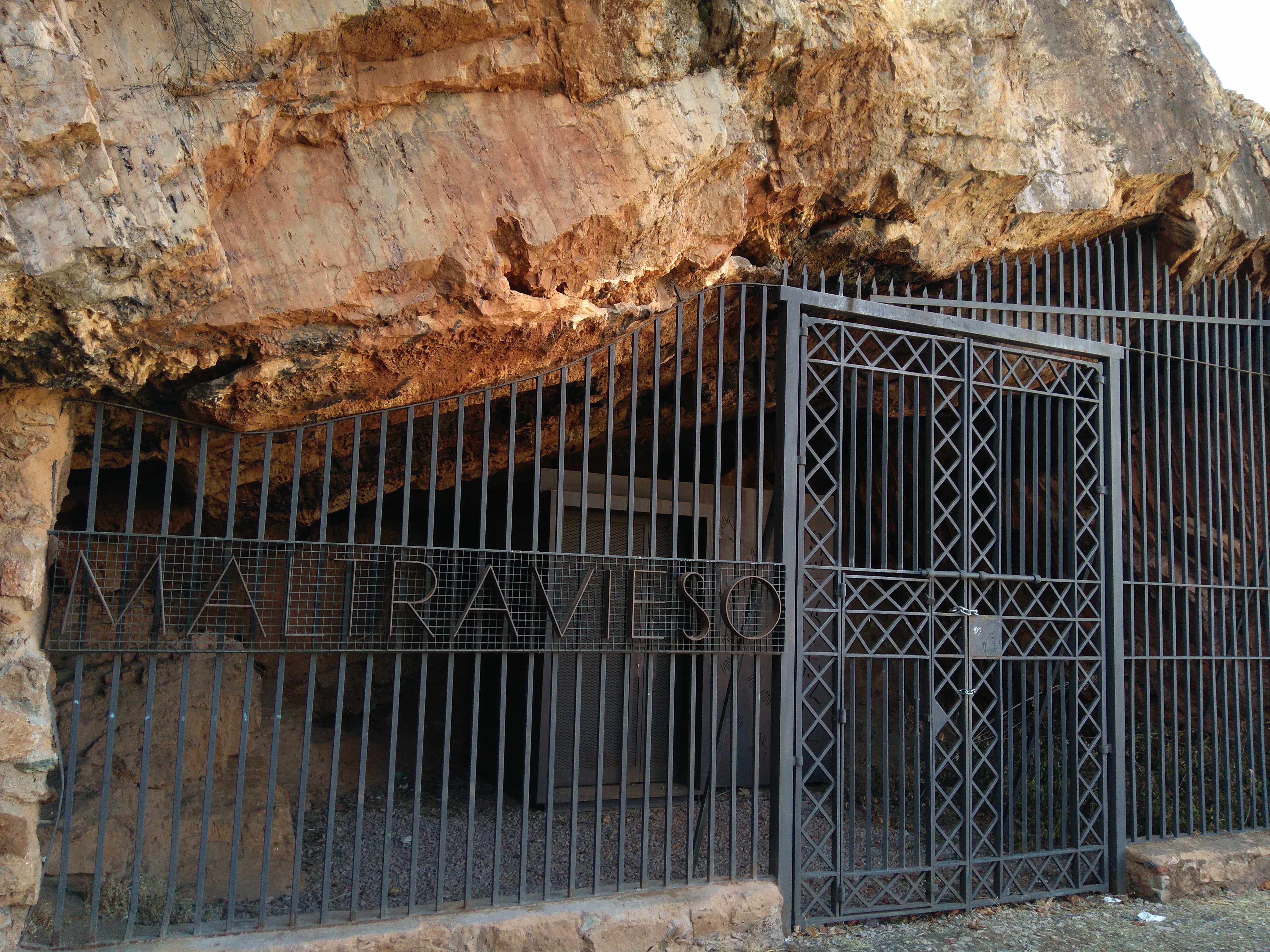 Cueva de Maltravieso 03
| Type | Subtype | Date | Description | Notes | Source |
|---|---|---|---|---|---|
| link | page | Bien de Interés Cultural page@ | Wikidata | ||
| site | cave | Cave of Maltravieso | monument, cave | Wikidata | |
| site | tunnel | Puerto Viejo Tunnel | high-speed railway tunnel | Wikidata | |
| commons | image | Entrada Maltravieso | Commons | ||
| commons | image | Maltravieso | Commons | ||
| commons | image | ParqueMaltravieso | Commons | ||
| commons | image | EntradaMaltravieso | Commons | ||
| commons | image | Cueva de Maltravieso en Cáceres | Commons | ||
| commons | image | Cueva de Maltravieso 02 | Commons | ||
| commons | image | Cueva de Maltravieso 01 | Commons | ||
| commons | image | Cueva de Maltravieso 03 | Commons | ||


